Team previewNot public. This is the draft for BAVA team members to review before the live site goes up.
BAVA, Black American Voters Alliance logo
Black American Voters Alliance · Florida

Our vote is earned, not owned.

We are Black voters with no loyalty to any party. Whoever wants our vote has to come talk to us and show what they will do for our communities.

Who we are

Loyal to our community, not to a party

The Black American Voters Alliance is a community-driven Florida political committee made up of Black Americans who are tired of being taken for granted.

For too long, one party has counted on our votes without delivering, and the other has rarely asked for them. BAVA exists to change that.

Our vote has value, and anyone who wants it has to earn it. We want a seat at every table, Republican and Democrat. We will work with any candidate or leader who is serious about improving life in our communities, from the city council and the school board all the way to the governor's office and Congress.

We welcome every Black American voter, whether their family has been here for generations or arrived recently.

No talk, no vote.

We do not support any candidate who does not speak to us directly about what they will do for our communities. That rule is the same for local races and federal races, and the same for both parties.

Where we are

Florida, statewide

BAVA is being formed as a Florida political committee. Our first work is in South Florida: Miami-Dade, Broward and Palm Beach. We also track races in Georgia and Alabama, where many of our families and churches have ties.

Where we meet

Where our people are

Barbershops, churches, motorcycle clubs, civic leagues and neighborhood gathering spots. Candidates come to us and hear from us directly.

Who we reach

Every Black voter

With special focus on Black men, who are often overlooked by traditional campaigns and whose votes are the most up for grabs.

What we will do
  • Build real relationships between Black community leaders and candidates from both parties.
  • Bring candidates into our communities so they hear from us directly.
  • Organize and turn out voters, especially Black men.
  • Support candidates who make clear, specific commitments to our communities, and hold them to those commitments after they win.
  • Raise money for our outreach and the candidates we back, in full compliance with Florida election law.
What we look for in a candidate

Concrete plans on the issues that matter most to our communities:

  • Economic opportunity and Black business ownership
  • Good jobs and fair pay
  • Safe neighborhoods and fair treatment under the law
  • Strong schools
  • Affordable homeownership

Party label does not decide our support. Results do. The full list is on the Our demands tab.

How we are organized

BAVA will register with the Florida Division of Elections as a political committee. It will have a chair, a treasurer and a dedicated bank account, and it will file every required financial report. Founder: Patrick B. Gillum.

History of the Black vote

We were Republicans first

For about seventy years after the Civil War, most Black Americans who could vote were Republicans. Here is how that changed, and what our loyalty has and has not brought us since.

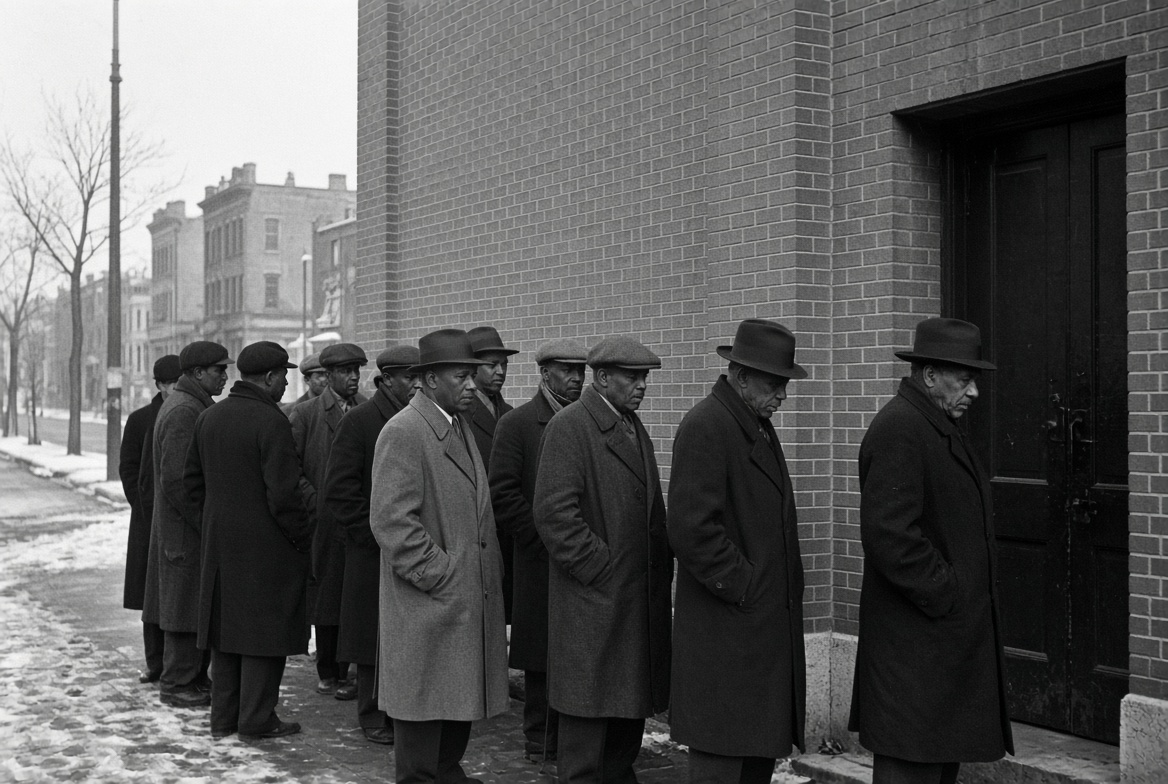
Black workers waiting outside a public building in the Depression years
The Depression years — when the New Deal changed the math
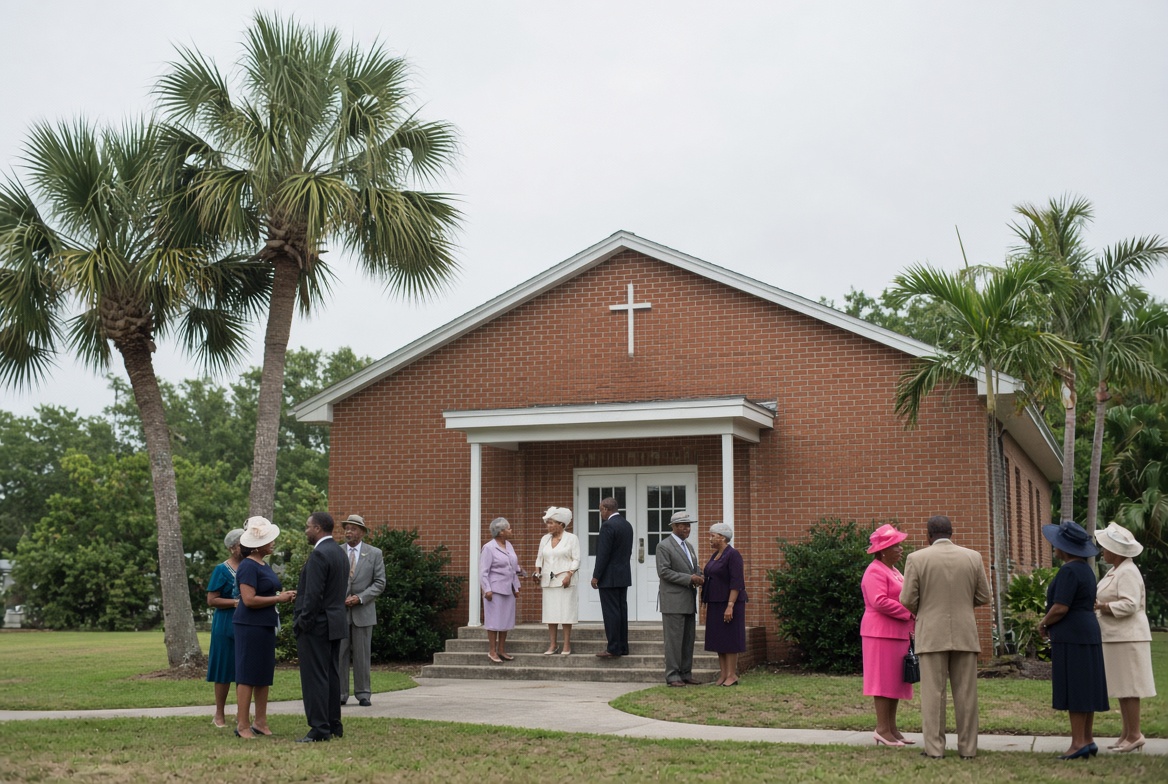
A congregation talking outside a church after service
Church steps — where candidates used to have to show up
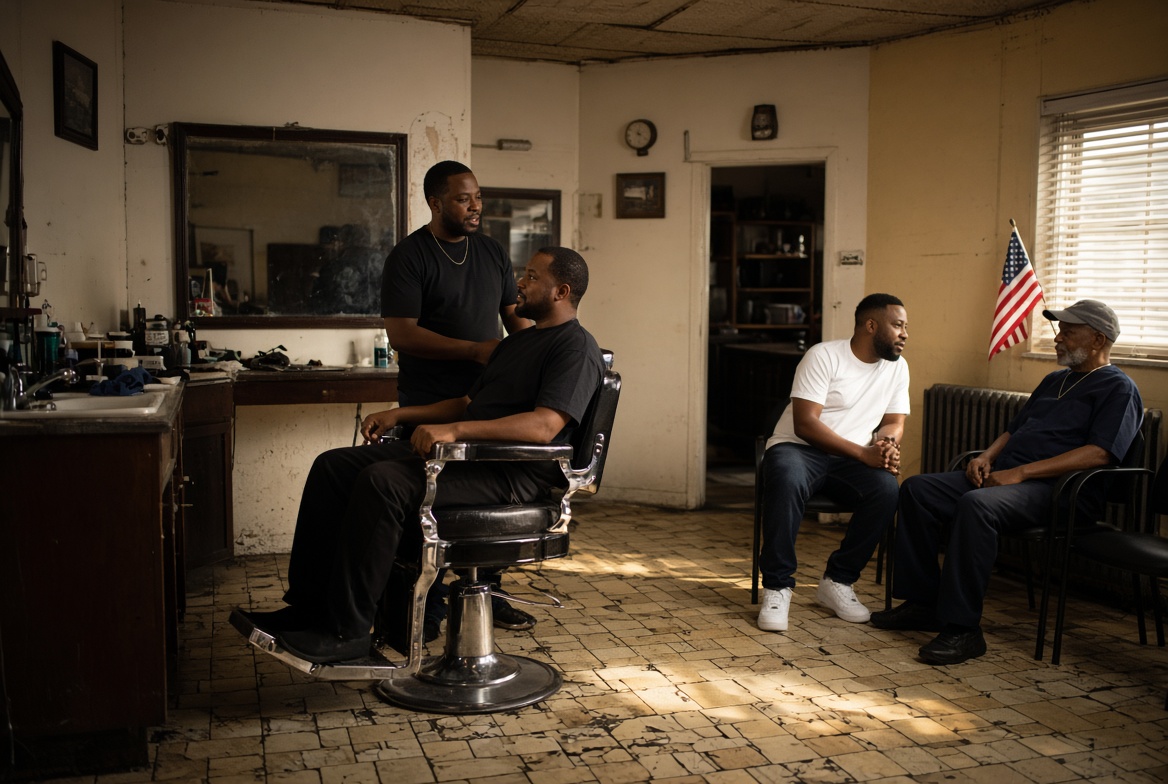
Men talking in a neighborhood barbershop
The barbershop — still the room a candidate has to walk into
Hands passing a paper ballot
The ballot — earned, not owned
1865–70

Freedom and the ballot Republican era

A Republican-led Congress passed the 13th, 14th and 15th Amendments, ending slavery, guaranteeing citizenship and equal protection, and forbidding states to deny the vote because of race. Black men began voting across the South, and they voted Republican, the party of Lincoln.

1870–71

Black Republicans in Congress

Hiram Revels of Mississippi became the first Black U.S. Senator in 1870. In 1871 Josiah T. Walls took his seat as Florida's first Black congressman. Both were Republicans. During Reconstruction, Black men served in state legislatures across the South, including Florida's.

1877–1940s

Jim Crow shuts us out

When federal troops left the South in 1877, Southern Democrats took back control and wrote Black voters out of politics with poll taxes, literacy tests, all-white primaries and violence. Florida adopted its poll tax in 1889. For decades, most Black Southerners could not vote at all.

1932–36

The first big switch Democratic shift

In 1932, most Black voters still backed Republican Herbert Hoover. The Great Depression changed that. By 1936 about 7 in 10 Black voters chose Franklin Roosevelt, drawn by New Deal jobs and relief.

That help came with limits. Social Security, as first passed in 1935, left out farm and domestic workers, which excluded most Black workers at the time. Many New Deal programs were run locally in ways that shortchanged Black families.

1948–60

Both parties compete for us Contested

Democrat Harry Truman desegregated the armed forces in 1948, and Southern Democrats walked out of their convention in protest. Republican Dwight Eisenhower sent troops to integrate Little Rock Central High in 1957 and signed civil rights acts in 1957 and 1960. In 1960 Republican Richard Nixon still won about a third of the Black vote.

1964

The second big switch Democratic lock-in

The Civil Rights Act of 1964 passed with a larger share of Republicans in Congress voting yes than Democrats. But the Republican nominee for president, Barry Goldwater, voted against it. Democrat Lyndon Johnson signed it and won about 94% of the Black vote. The Voting Rights Act followed in 1965.

From that election on, Black voters became the most loyal group in the Democratic Party, and the Republican Party largely stopped asking for our vote.

1964–2020

Sixty years of near-total loyalty

For more than half a century, Democrats have regularly won around 9 in 10 Black votes. When a party knows it has your vote, it does not have to compete for it, and the other party decides it is not worth the effort. That is how a whole community ends up taken for granted by both.

2024

The ground starts to move Up for grabs

In 2024, about 15% of Black voters backed the Republican candidate, up from 8% in 2020. Among Black men it was about 21%. Black voters are showing both parties that our vote is not guaranteed.

Black vote for the Democratic candidate

Share of Black voters choosing the Democratic presidential candidate, selected years.

Early years are historical estimates. 2020 and 2024: Pew Research Center validated-voter studies.

What loyalty has delivered

Our votes were counted on. Our needs were not.

Democrats have held the White House, Congress, and many of the city halls where we live, often with our votes as the deciding margin. Yet the gaps that shape our daily lives have barely moved.

6×The typical white household holds about $285,000 in wealth. The typical Black household holds about $44,000. (Federal Reserve, 2022)
28 ptsBlack homeownership was 44.7% in 2023, against 72.4% for white households. (National Association of Realtors)
30 yrsThe Black-to-white wealth ratio in 2022 was about where it stood in 1992. (NCRC analysis of Federal Reserve data)

Our position. Too often, Democrats have shown up in our churches the Sunday before an election and then gone quiet on the issues we raised. Republicans, for their part, have too often not shown up at all. Neither party has earned automatic loyalty.

That is why BAVA backs people, not parties. Any candidate who comes to us, makes specific commitments, and keeps them can earn our support.

Why now

Open to both parties, starting today

A vote that can go either way gets attention. A vote that is taken for granted gets ignored. We intend to be the vote that both parties have to work for.

The moment

An open governor's race

Florida elects a new governor on November 3, 2026. The sitting governor cannot run again, so both candidates have to win new voters. That is our opening.

The shift

Black voters are moving

Black support for Republicans roughly doubled between 2020 and 2024. Both parties now know our vote is in play, and they will pay attention to an organized group.

The rule

Talk to us directly

Any candidate of either party can earn our support by coming to our communities and making specific commitments. If they do not talk to us, we do not support them.

Our first focus

The 2026 Florida governor's race

We are opening a direct line between Black leaders across South Florida and the candidates of both parties, starting with private meetings between the candidates and groups of influential local leaders. A meeting is a chance for a candidate to earn our support, not a guarantee of it. BAVA has not endorsed anyone.

From local to federal

City council, county commission, school board, sheriff, state house, governor, Congress. The rule is the same at every level: no commitment to our communities, no vote.

What we need from the team
  • Leaders willing to serve as officers, including a treasurer
  • Introductions to community leaders, clergy, business owners and organizers
  • Help planning meetings and voter outreach in your area
  • Ideas for fundraising and early support
Our demands · No compromise

Support all of it, or no support from us

These are not talking points. A candidate has to back 100% of our demands for their state. Partial support is not support. We only back candidates who commit to every item.

Every candidate

100% of the state agenda

Every item on the demands for their state, in writing, before we back them. No picking and choosing.

Governors

We must be in the administration

Black Americans in the cabinet and senior leadership, with real authority. We do not accept not being represented.

U.S. Senators

Fight for us in Washington

A senator we back goes to Washington to fight for our communities and our causes, and answers to us on how they did it.

Every state

Each state will have its own demand sheet. Florida is written. The rest are being written.

A Governor, a member of Congress, or a U.S. Senator does not get our support unless they will fund historic Black communities in their state. We only have a full dollar plan for Florida so far. Other states keep the same four tests — capital, homes, trades, and heritage sites — until local leaders fill in the numbers.

Dedicated state programs we can name
  • Florida — African-American Cultural and Historical Grants (AACH). One-time capital program, awards up to $500,000, or $1 million with match. The 2021 window was funded up to $30 million. It is not an ongoing pipeline for Eatonville, Overtown, Frenchtown, Lincolnville, Parramore, and Historic Northwest. That is why the Florida blueprint is still a demand.
  • New York — $3.8 million African American Heritage Grant Program announced in 2026 for education and capital projects.
  • Virginia — Black, Indigenous, and People of Color Historic Preservation Fund, a standing state grant for acquisition, rehab, and protection of those sites.
What most other states do not have

Most states do not run a dedicated, named grant line for Foundational Black American historic districts the way Florida’s AACH or Virginia’s BIPOC fund do. They lean on general historic-preservation money, or on federal and private pots — the National Trust African American Cultural Heritage Action Fund, National Park Service underrepresented-community and HBCU grants.

That is not a pass. If a state has no dedicated fund, the demand is to create one and put real dollars on the projects below. We only list work that is already documented. Local pipelines you send will be added.

Projects that still need a backer

These are the sites. A candidate who wants us has to fight to fund them.

Not every activist in every state is in this list. These are public, named projects and standing problems. Same four tests everywhere: capital, a house you can keep, trades, and the historic ground itself.

StatePlace and problemWhat has to get funded
FloridaEatonville, Overtown, Frenchtown, Lincolnville, Parramore, Historic NorthwestFull Heritage & Opportunity blueprint: $150M–$250M state share over four years. Eatonville’s $34.4M water-and-sewer award is a start, not the whole town.
OklahomaGreenwood / North Tulsa. Massacre, then I-244 cut the district again.Kirkpatrick Heights–Greenwood plan is approved; construction is not underway. The $105M Greenwood Trust is still raising private money. State and federal dollars have to show up, not only charity.
MinnesotaRondo in St. Paul. I-94 took more than 700 homes and 300 businesses. Black homeownership there fell from 827 homes to 512 between 2000 and 2020.Reconnect Rondo anti-displacement plan: about $90 million near-term for land, housing, and a cultural enterprise district before a land bridge prices people out.
AlabamaAfricatown and Mobile’s civil-rights corridor. Last slave ship Clotilda. Neighborhoods still emptying when people get a chance to leave.Civil Rights and Cultural Heritage District master plan and housing rehab so descendants are not displaced.
GeorgiaSweet Auburn in Atlanta; Gullah Geechee land on the coast.Auburn Avenue corridor restoration without pushing out the people who stayed. State heirs’-property legal aid so coastal families can keep title.
South CarolinaCharleston, Mitchelville, Gullah Geechee heirs’ property. Developers use cloudy title to force sales.Title-clearing fund and heirs’-property protection that works in practice. Heritage and flood work for historic Black settlements.
MississippiMound Bayou; Farish Street in Jackson. Heirs’ property across the Delta.State title fund, Farish Street rebuild, and water systems in Black-founded towns that still fail. USDA has called heirs’ property the leading cause of Black involuntary land loss.
LouisianaTremé in New Orleans. Flood, tourism pressure, and title problems.Flood and housing money that stays with the families who live there. Heirs’-property legal aid.
North CarolinaHayti in Durham; Wilmington after urban renewal and 1898.Hayti commercial rebuild and a standing state heritage-and-housing match.
TexasFreedmen’s Town in Houston. Brick streets under development pressure.Protect the remaining historic blocks, clear titles, and put capital into Black-owned businesses on that ground.
IllinoisBronzeville. Vacant land where public housing came down and replacement units were not built.Housing and storefronts on the empty acres. A heritage-area designation is not the project.
MichiganBlack Bottom and Paradise Valley were cleared. Idlewild still stands.State capital for the historic West Side and Idlewild infrastructure — not only a marker.
VirginiaJackson Ward. A BIPOC preservation fund exists; the ward still needs housing protection.Use that fund at scale. Cap displacement. Trades and small-business capital on the ward.
New YorkHarlem; Weeksville. A $3.8M state heritage grant program launched in 2026.$3.8 million does not rebuild a corridor. Demand a capital match for housing, titles, and Black-owned commercial streets.
NationalFamily land held as heirs’ property. Highways through Black Main Streets.Title-clearing money in every Southern state. Repair or cap the highway cut. No endorsement for a candidate who will not take those two on.

Drawn from public plans and notices: Florida AACH and FDEP; Greenwood Trust and Kirkpatrick Heights plan; Reconnect Rondo; Mobile County civil-rights district plan; USDA and Lincoln Institute on heirs’ property; New York AAH grants; Virginia BIPOC fund. A local pastor or block club can add their project when they send it.

Florida · Active

The Florida Heritage & Opportunity Enterprise Blueprint

Our Florida demands: capital, homeownership, jobs and heritage for Florida's historic Black communities, paid for from existing funds with no new taxes.

CommunityNeedPriorities
Eatonville
Orange County
$15M–$25MHungerford School property acquisition, Zora Neale Hurston museum expansion, and the $34.4M state water and sewer overhaul.
Overtown
Miami-Dade
$500M+ total
$50M state match
SEOPW CRA commercial corridor expansion, $175M municipal bond leverage, and the HUD $332M housing Transformation Plan.
Frenchtown
Tallahassee
$20M–$40MMacomb Street commercial corridor revitalization, small business incubators, grocery access, and property preservation.
Lincolnville
St. Augustine
$10M–$20MExcelsior Museum restoration, civil rights heritage trail, and stormwater and flood protection for historic homes.
Parramore
Orlando
$30M–$50MCommunity land trust homeownership, facade renovation grants, and local entrepreneurship hubs.
Historic Northwest
West Palm Beach
$25M–$35MSunset Lounge jazz district rehabilitation, commercial facade grants up to $150K, and home buyer assistance.
Statewide$610M–$685MTotal pipeline from federal, CRA and municipal sources. Direct state contribution: $150M–$250M over 4 years.
Pillar I

Access to capital and private enterprise

  • Florida Community Capital Match: $50M from the state surplus as a 1:1 guarantee pool for minority-owned banks and local CDFIs, unlocking $250M+ in low-interest business and equipment loans.
  • 14-day micro-permitting for businesses in historic business corridors.
  • Enterprise tax relief: 3-year state corporate tax and commercial lease tax exemption for new small businesses that hire 50%+ local workers.
Pillar II

Affordable homeownership and protection

  • Sadowski Housing Trust protection: 100% of SHIP and SAIL funds protected, with $75M a year for down-payment grants up to $25,000 and infill homebuilding in target ZIP codes.
  • Heirs' Property Title Fund: $5M for legal aid to clear family land titles and stop tax-sale losses.
  • Heritage Senior Tax Cap: property valuation increases capped at 1% a year for low-income seniors 62+ who have lived in historic districts 15+ years.
Pillar III

Job growth and trade skills

  • Trade apprenticeship tax credit: $5,000 per apprentice for contractors hiring graduates from under-resourced ZIP codes into licensed trades.
  • HBCU innovation hubs: $40M in workforce and tech grants to FAMU, Bethune-Cookman, Edward Waters and Florida Memorial for cybersecurity, aviation mechanics and construction management.
  • Local hiring: state infrastructure projects over $5M must include local minority enterprise subcontracts.
Pillar IV

Direct community investment

  • State grant matching: African American Cultural & Historical grants, up to $1M per project, for local heritage work.
  • Water and infrastructure: FDEP water, sewer and stormwater grants prioritized for historic towns such as Eatonville.
  • CRA match funding: dollar-for-dollar state match for the CRAs in Frenchtown, Overtown and Lincolnville.

Paid for without new taxes. Sadowski documentary stamp revenue ($200M–$350M+ a year), the state's African American Cultural & Historical grant program, FDEP revolving funds, and the state budget surplus.

Built to pass either party. Republicans can back it because it runs on private enterprise, property rights, tax incentives and trade jobs. Democrats cannot oppose it without voting against funding for Black communities, HBCUs, down-payment help and local infrastructure.

Other states

Florida is our first state agenda. Demands for other states will be built the same way, around their own historic Black communities. The 50 states tab lists each state's 2026 races and the communities we are starting from.

Our team

The people behind BAVA

National officer seats first. Then each state gets its own group. Photo and bio go in when you name the person. This page is a preview for the team, not a signup form.

Founder

Patrick B. Gillum

Patrick started BAVA to give Black voters a seat at every table. He is the founder and CEO of 40 Acre Trust, which works on housing, agriculture and economic development, and has worked in the music business since 1993 as a promoter, artist manager and songwriter.

State teams

Every state will have its own people

Florida is first. Each other state gets a lead seat now. When that state is organized, we add the rest of that state’s officers the same way — photo and bio in the box.

All 50 states · General election November 3, 2026

Every state, one standard

The 2026 races for governor and U.S. Senate in every state, and the historic Black communities each state agenda will be built around. BAVA has not endorsed anyone. A candidate is listed with their website and donation page only after they commit to 100% of their state's demands.

How a candidate gets listed
  • The candidate meets with BAVA and community leaders in person.
  • They commit in writing to 100% of their state's demands.
  • Governors commit to Black Americans in their administration. Senators commit to fight for our causes in Washington.
  • The chair and the endorsements chair agree to back them. Their profile then goes up here with their website and donation page.

Every state also elects U.S. House members and local officials in 2026. Georgia holds a Senate runoff on December 1 if no candidate wins a majority. Florida and Ohio Senate races are special elections.